
What Kentucky Court Dockets Record
A docket is the case's chronological register. It notes when a complaint, citation, indictment, petition, motion, response, notice, order, judgment, appeal, or other event entered the record. A line can name the filing party, event type, date, hearing, judge, or financial entry. It does not necessarily reproduce the document. Evidence and discovery may never appear as public images, and transcripts are usually prepared or ordered apart from the docket.
Kentucky has one Circuit Court Clerk in each county for Circuit, Family, and District matters. Circuit dockets cover general civil cases, felonies, divorce and Family Court work, contested probate, and District appeals. District dockets cover misdemeanor, traffic, preliminary felony, limited civil, eviction, small claims, juvenile, guardianship, and uncontested probate matters. Family Court is a Circuit division where available. Kentucky does not use a separate statewide municipal-court tier for ordinary state citations.
- Docket entry
- An index statement that an event occurred.
- Order
- The judge's filed direction or decision.
- Disposition
- The outcome of a claim or charge, such as dismissal, conviction, acquittal, or judgment.
- Remand
- An appellate court's return of a case for further action.
Find Kentucky Court Dockets Online
Guest CourtNet is Kentucky's public statewide entry for informational trial-court case events. All counties participate in the central case-management environment, but guest access does not equal every document, protected image, sealed case, or historic file. Search results are snapshots that can be delayed or corrected. The filing county's Circuit Court Clerk remains the official source. Use the county directory when a docket identifies the county or when a portal result is incomplete.
- Open Guest CourtNet, continue as a guest, and accept the displayed access terms.
- Select the likely filing county and court or case type when those filters are available.
- Enter the full case number, or search a party name and narrow with dates and county.
- Confirm the header, then read events from filing through the latest status and future schedule.
- Call the county clerk to verify a court date or request a signed document or certified docket.
Search preparation reduces false matches. Gather the legal name used at filing, aliases or prior surnames, likely county, approximate year, and any citation or lower-court number. Venue normally follows the event, land, residence, or offense rather than a person's current home. If a case transferred, preserve both county references and all linked numbers. A felony can begin under a District F number and continue under a Circuit CR number after indictment.
Read Kentucky Court Docket Entries
Start with the header rather than the event list. The county, court, division, case number, parties, filing date, type, and status must match the intended case. Then read events in order. Look for an amendment, transfer, consolidation, reopening, appeal, or later order before treating an early entry as current. Kentucky docket labels can be abbreviated. Quote an unfamiliar label exactly and ask the clerk rather than guessing from a nonofficial glossary.
| Field | What It Shows |
|---|---|
| Case Header | County, court, division, full number, type, filing date, and current status. |
| Parties | Plaintiff or Commonwealth, defendant, petitioner, respondent, counsel, and roles. |
| Entry Date | Date an event was entered; it may differ from the date a document was signed. |
| Event Type | Filing, arraignment, plea, motion, hearing, continuance, order, trial, judgment, appeal, or remand. |
| Charge Detail | Description, KRS citation, degree, amendment, disposition, and outcome date where public. |
| Schedule | Event, date, time, courthouse, courtroom, and judge where populated. |
| Money / Bond | Bond, fine, cost, restitution, or payment entries; these do not independently state guilt. |
| Document Link | A public image when allowed; an entry can exist without a downloadable document. |
A future hearing can coexist with a disposed count because another count remains open. A zero balance does not prove dismissal. An original felony charge may be reduced or dismissed while another amended count ends in conviction. In each situation, the disposition for each count and the signed judgment are more reliable than the original accusation or a short status label.
Kentucky Courts With Public Dockets
Kentucky trial and appellate dockets use different access systems. Guest CourtNet surfaces public District, Circuit, and Family events. The Supreme Court and Court of Appeals use C-Track Public Access, linked from the official record-request page. C-Track can search by appellate number, party or attorney, lower-court number, filing range, and court. The appellate record can show briefs, motions, submission, argument, opinion, mandate, and remand.
- District Court: misdemeanors, traffic, preliminary felony matters, limited civil, eviction, small claims, probate, and guardianship events.
- Circuit and Family Court: felonies, general civil matters, divorce, custody, adoption, contested probate, and District appeals.
- Kentucky Court of Appeals: appellate events, briefs, argument or submission, opinions, and mandates through C-Track.
- Supreme Court of Kentucky: discretionary review, direct severe-sentence appeals, orders, calendars, and opinions through appellate access.
The Kentucky eFiling and CourtNet service page documents the current system and the phased next-generation eCourts project.
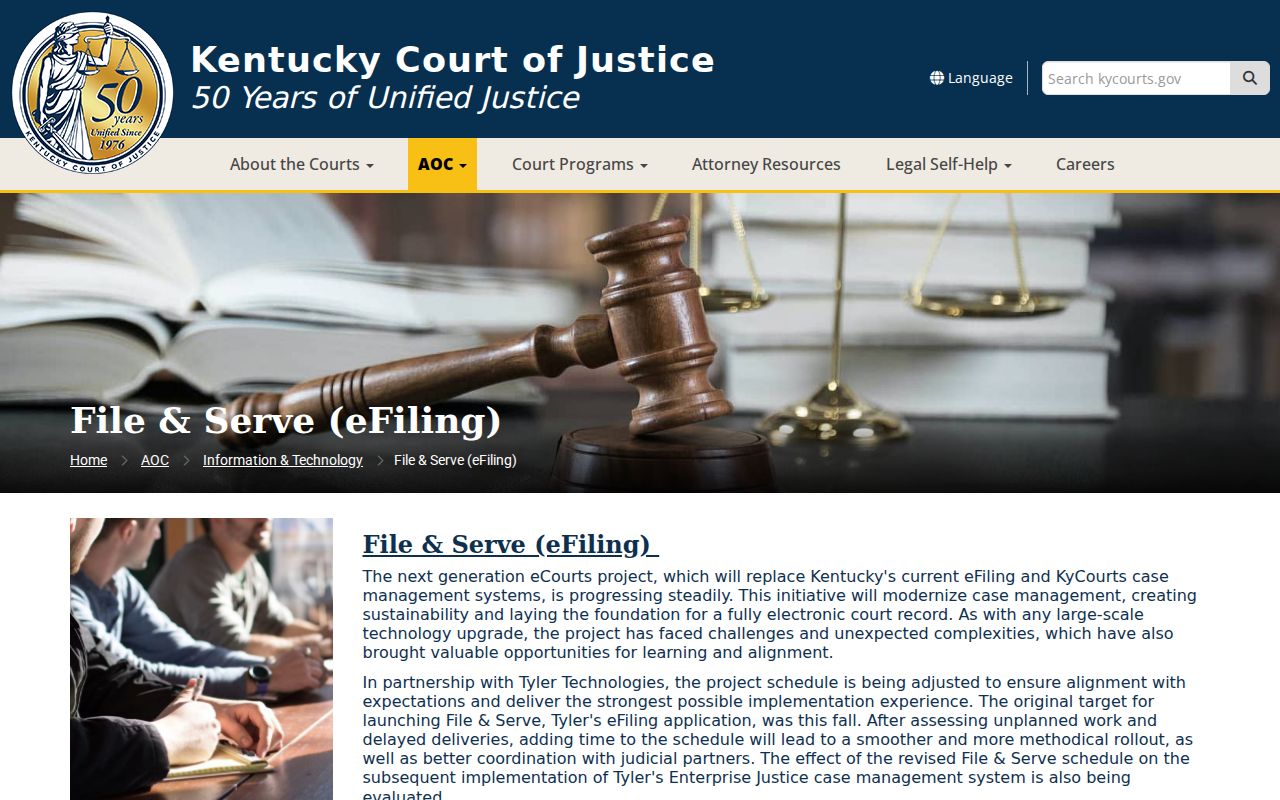
The technology project does not change the key custody rule: the county Circuit Court Clerk holds the official Kentucky trial docket and file.
Kentucky Docket or Full Record
A Kentucky docket is the event index. The full record contains the actual complaint, petition, indictment, motion, response, admitted exhibit, order, judgment, or other filed document. A pleading states a party's claim or request; filing it does not make the allegation true. The judge's signed order states the court's ruling. Discovery often stays outside the public file unless used in a motion or trial. A transcript may require separate preparation.
| Docket | Full Case Record | |
|---|---|---|
| Format | List of entries | Full documents |
| Access | Guest CourtNet or C-Track when public | Request from county or appellate clerk |
| Contents | Dates, labels, status, schedule, and basic financial data | Pleadings, exhibits, signed orders, judgments, recordings, and transcripts |
| Use | Locate and track a case | Read the filing or prove an official outcome |
| Certification | Portal printout is not certified | Clerk can issue a certified copy when available |
Certification shows that a copy came from the clerk-held record. It does not prove every statement in a complaint or affidavit. Ask the receiving organization whether it needs a plain copy, certified copy, or authenticated copy before paying. County page, certification, media, postage, and card charges vary, so obtain an estimate.
Decode Kentucky Court Dockets
Kentucky case numbers commonly use CI for Circuit civil, CR for Circuit criminal, F for District felony or preliminary matters, M for misdemeanor, T for traffic, and P for probate. Preserve the complete number, including year, code, sequence, leading zeroes, and county. Codes can vary by matter and system generation, so they identify a route rather than replace the case header.
Common concepts include arraignment, when charges are stated and a plea is addressed; continuance, a postponement; disposition, an outcome; and remand, an appellate return for more work. A motion asks the judge to act. An order records the judge's direction. Bond concerns release and appearance, not punishment. Probation is court-ordered community supervision, while parole follows imprisonment and is administered through a separate executive process.
Verify future dates directly with the clerk. Weather, continuance, reassignment, and data delay can change the listed courtroom or time. A screenshot does not excuse a missed appearance. If the case has a transfer, appeal, or later revocation, follow each linked number and read the newest signed order rather than relying only on the last short event label.
Federal Dockets in Kentucky
Federal court dockets are separate from Kentucky Court of Justice records. The state is divided between the Eastern and Western U.S. District Courts, and each district has a separate bankruptcy court. Federal cases are searched through PACER rather than Guest CourtNet. A state felony, divorce, probate case, or traffic citation does not appear there unless a distinct federal proceeding exists.
The U.S. District Court for the Eastern District of Kentucky publishes its official court access and division information.
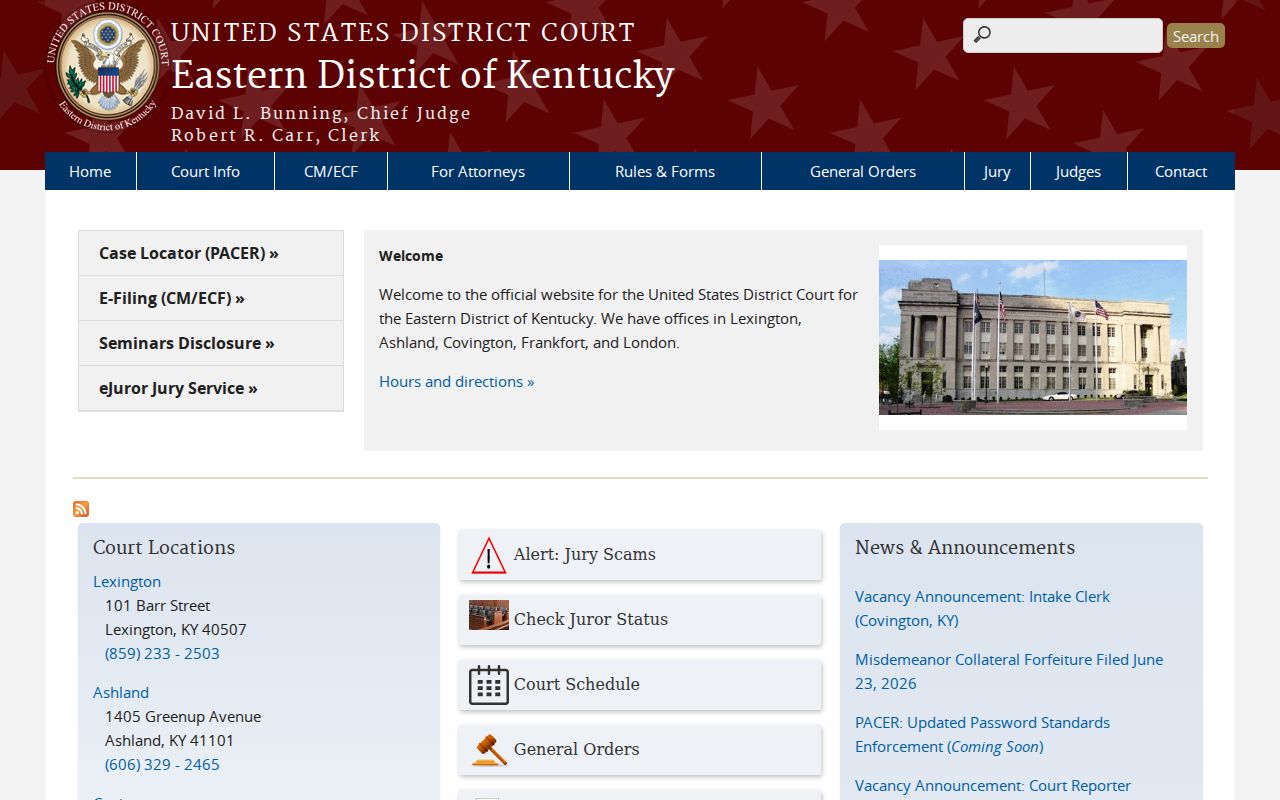
Its federal civil and criminal docket records use PACER and the federal clerk, not a Kentucky county Circuit Court Clerk.
The U.S. District Court for the Western District of Kentucky is the corresponding official source for western federal matters.
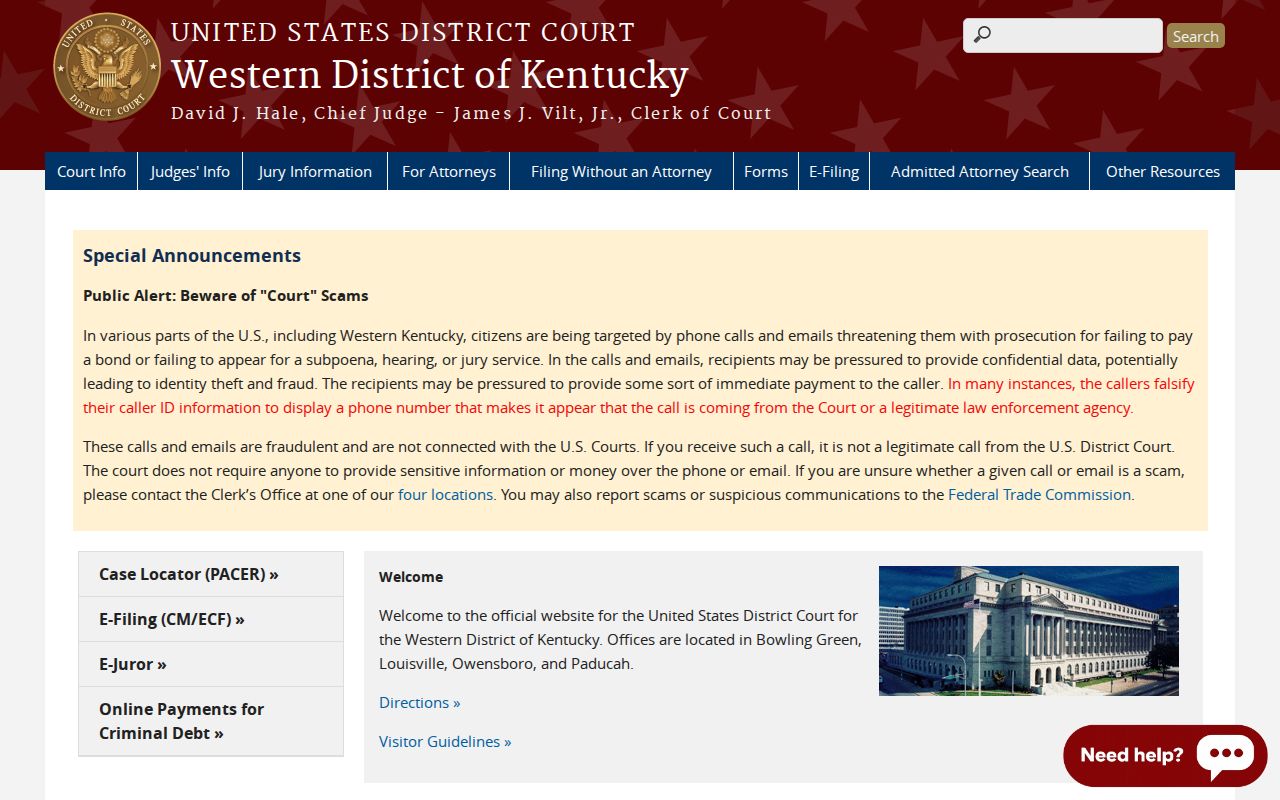
Use the court's county and division lists to confirm venue rather than inferring it from Kentucky judicial circuits.
Bankruptcy filings in the east use the Eastern District of Kentucky Bankruptcy Court.
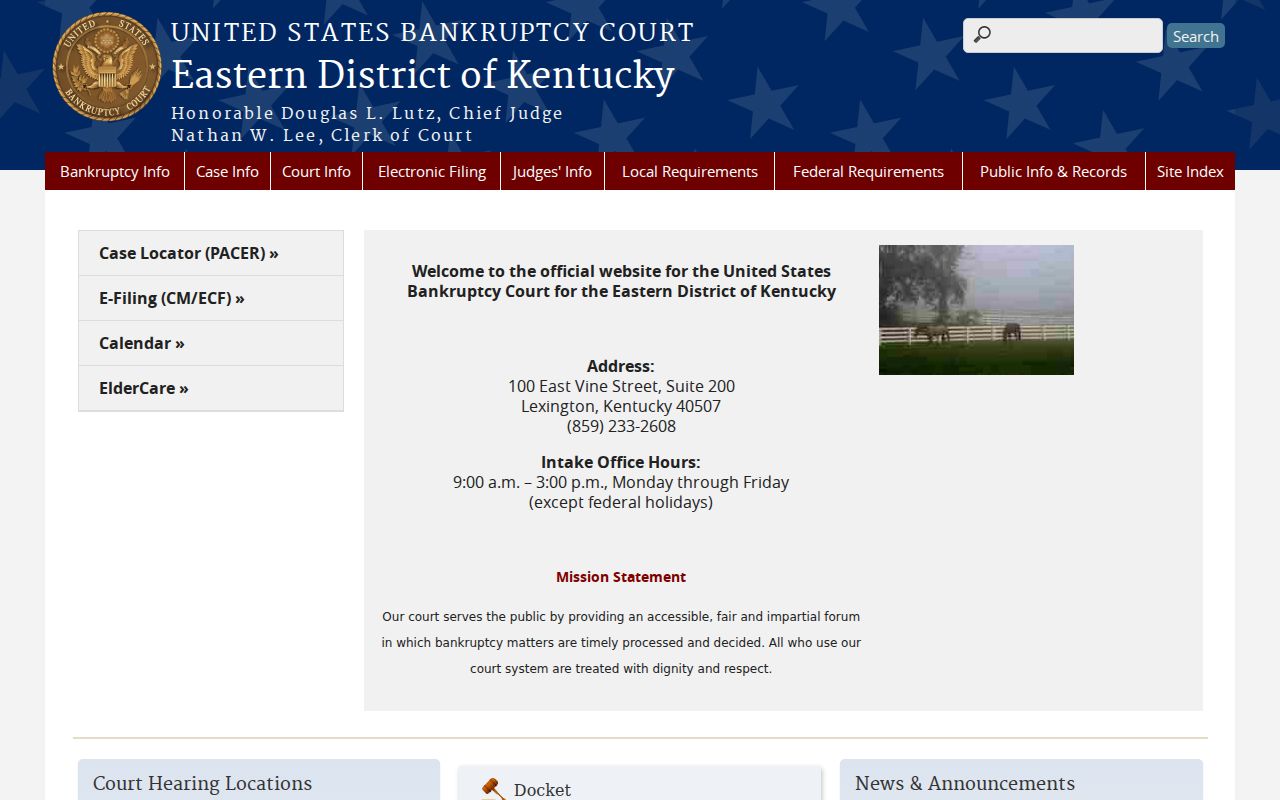
Petitions, schedules, claims, discharge events, and adversary cases are federal records and can contain protected financial details.
Western bankruptcy matters use the Western District of Kentucky Bankruptcy Court.
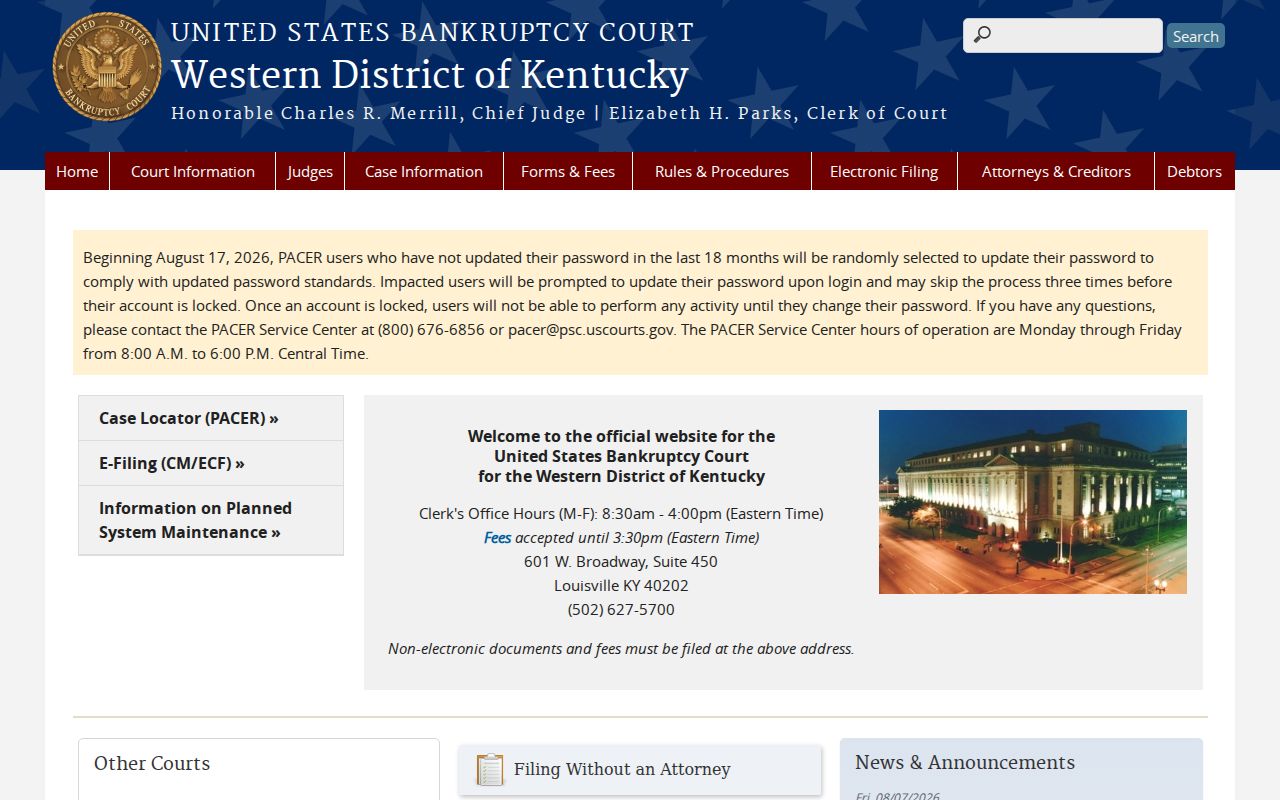
For either district, PACER provides docket reports and public documents, while certified federal copies come from the appropriate federal clerk.
Get Certified Kentucky Dockets
For a Kentucky trial docket, contact the Circuit Court Clerk in the county printed on the case header. Give the full number, party name, approximate year, court division, and exact item needed. Ask whether the file is onsite, stored at a record facility, transferred to archives, or lawfully destroyed. If it is at the State Records Center, the clerk must supply both the case and file-locator numbers because the center cannot search court files by a person's name.
Request only what serves the purpose. A current docket sheet may be enough to trace case activity, while legal proof often requires the signed and certified judgment or order. Ask about inspection, page count, certification, media, transcript preparation, postage, payment, and delivery. The Kentucky county directory routes to every local Circuit Court Clerk and court-record site.
Note: A portal docket is an informational lead; the filing county or appellate clerk supplies the authoritative certified Kentucky court record.