
How to Search Kentucky Court Records
Guest CourtNet through KYeCourts is the statewide public starting point for informational trial-case events. It covers Circuit, Family, and District matters entered by clerks in every county. It is not a certified record, and guest use does not expose every document, sealed case, protected image, or historic file. The Circuit Court Clerk in the county of filing holds the official trial record.
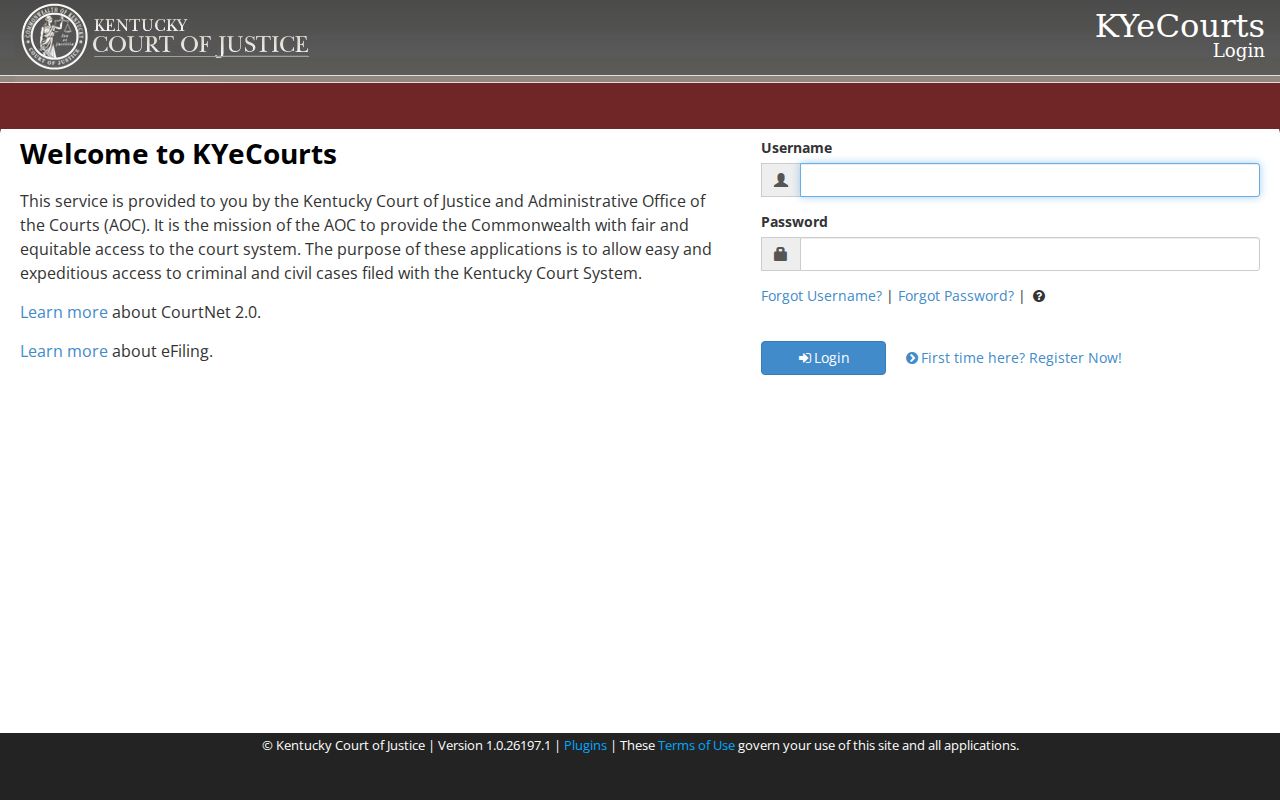
The guest entry helps locate a county and case number before a request for pleadings, orders, recordings, transcripts, or certification. Prepare the legal name used at filing, likely county, approximate year, case type, and any paper number. Searchers should compare dates, roles, and venue because a name match alone does not prove identity.
- Open Guest CourtNet and proceed through the guest terms.
- Select the filing county when known, then search by name, case number, case type, or court-date range.
- Confirm the case header, parties, filing date, status, and full number, including leading zeroes.
- Use the county directory to reach the Circuit Court Clerk that keeps the file.
- Request the exact document and ask whether a plain, certified, or authenticated copy is needed.
The Kentucky judiciary's request instructions set out the county-clerk and archive route.
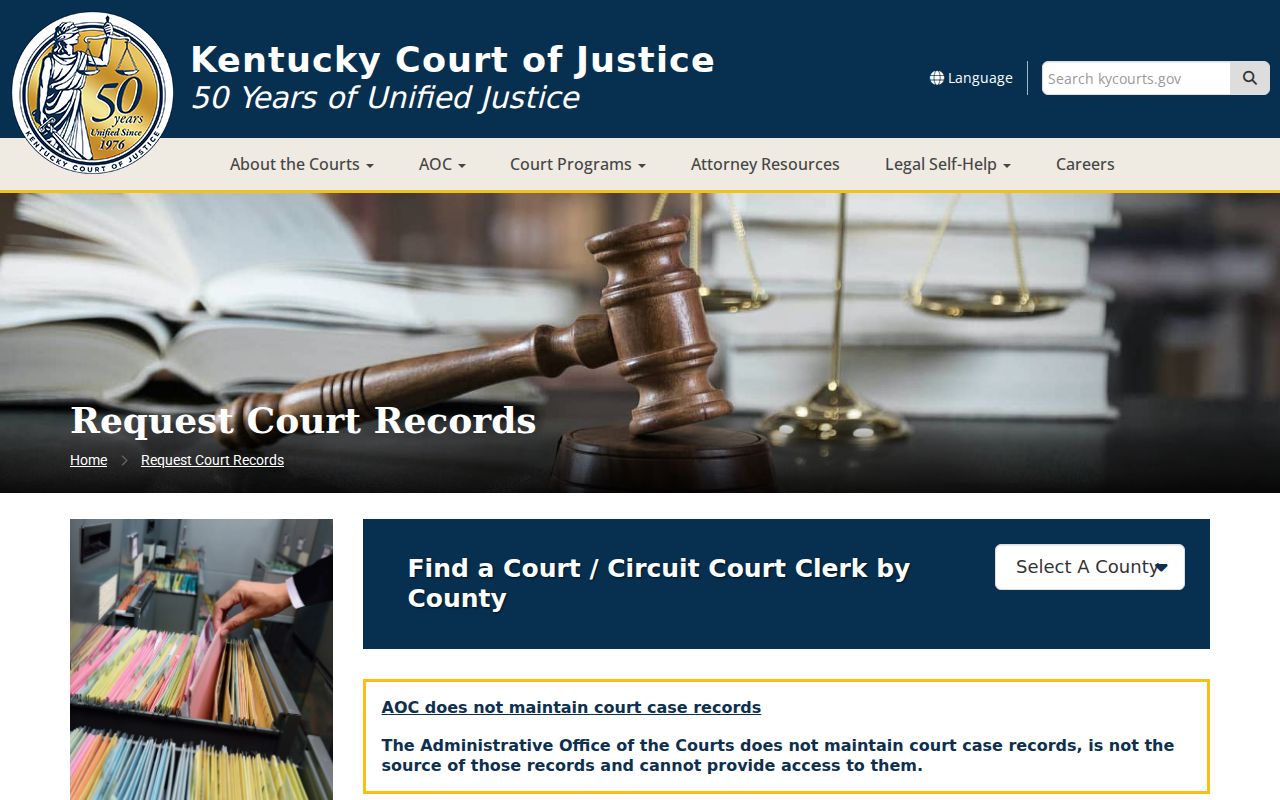
Older records may be onsite, stored at the State Records Center, transferred to an archive, or destroyed under a retention schedule. Start with the clerk even when nothing appears online.
The Kentucky Court Records System
Kentucky has one unified Court of Justice. The Supreme Court of Kentucky is the court of last resort. The Kentucky Court of Appeals is the intermediate appellate court. Circuit Court is the general-jurisdiction trial court, while District Court handles assigned limited-jurisdiction matters. Family Court and Business Court are divisions or specialized dockets, not higher tiers. The Kentucky court system page explains the full hierarchy and appeal routes.
District Court hears misdemeanors, ordinary traffic, preliminary felony proceedings, civil claims through $5,000, small claims through $2,500, eviction, juvenile matters, guardianship, and uncontested probate. Circuit Court hears felonies after indictment, general civil claims, divorce and other Family work, contested probate, and appeals from District Court or agencies. Rural counties can share judges, but each county still has a Circuit Court Clerk.
Typical appeal flow: District Court › Circuit Court › Kentucky Court of Appeals › Supreme Court of Kentucky.
| Court | Jurisdiction | Case Types |
|---|---|---|
| Supreme Court of Kentucky | Final state-law review and court administration | Discretionary review and direct review of specified severe sentences |
| Kentucky Court of Appeals | Intermediate appellate jurisdiction | Ordinary appeals from final Circuit and Family judgments |
| Circuit Court | General trial jurisdiction | Felony, general civil, family, contested probate, and District appeals |
| District Court | Limited trial jurisdiction | Misdemeanor, traffic, limited civil, probate, guardianship, and juvenile |
Types of Kentucky Court Records
Kentucky court records follow the court's subject authority. Circuit civil files include complaints, answers, motions, admitted exhibits, orders, verdicts, judgments, and appeals. District civil files include small claims and forcible-detainer cases. Criminal files can begin with a District complaint, citation, bond, and preliminary hearing, then move to a Circuit CR case after indictment. Family, probate, traffic, juvenile, mental-health, protection, and appellate records each have their own access limits and custodians.
- Criminal records: complaints, indictments, pleas, rulings, verdicts, sentences, and later supervision events.
- Civil records: claims, service, responses, motions, evidence entered in the record, orders, and judgments.
- Family records: divorce, custody, support, adoption, protection, and enforcement, with sensitive material restricted.
- Probate records: wills, fiduciary appointments, inventories, claims, settlements, guardianship, and contests.
- Traffic records: citation, plea, court date, fine, payment, failure-to-appear, warrant, and license-reporting events.
The judiciary's official self-help collection covers probate, divorce, protection, expungement, claims, and fee waivers.
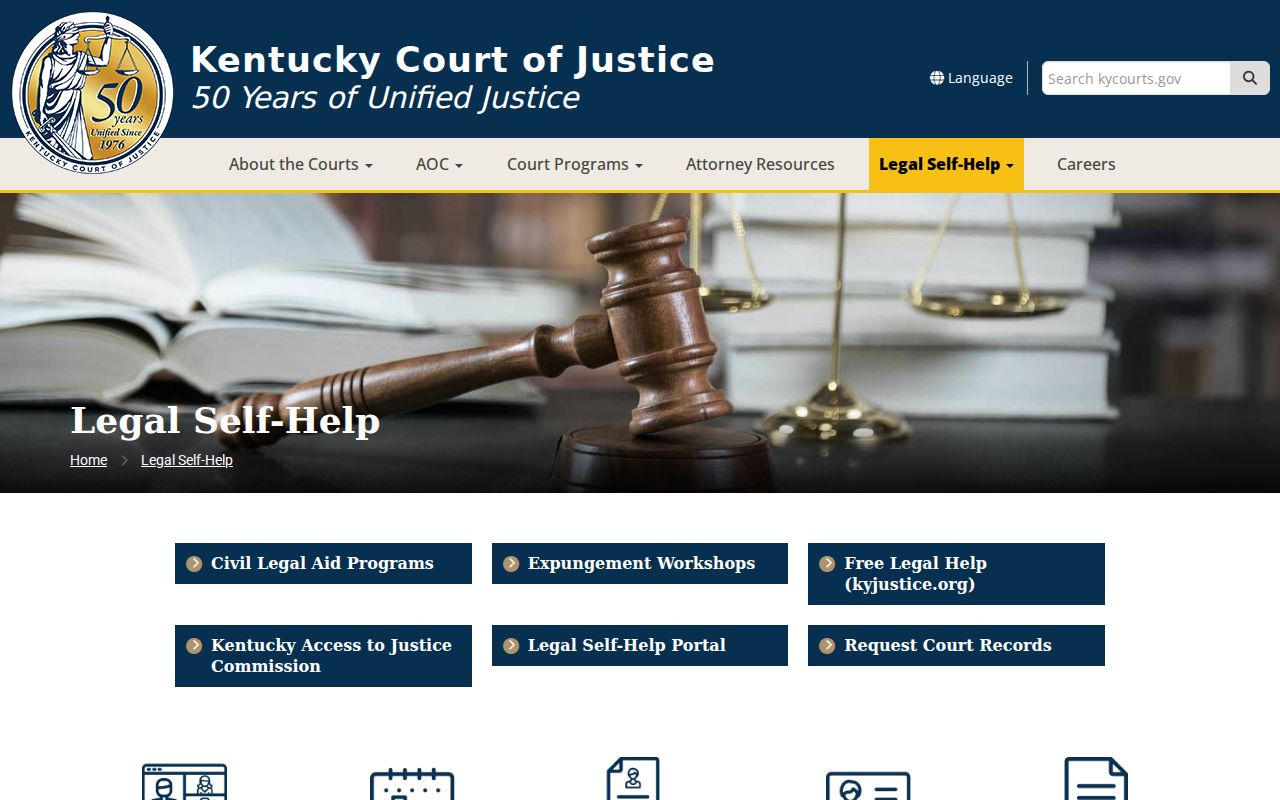
Forms and instructions help identify a process, but the county clerk still keeps the filed Kentucky court record.
What Kentucky Court Records Show
A Kentucky case header identifies the county, court, division, complete number, case type, filing date, status, and parties. Event lines may show filings, service, arraignment, plea, motions, hearings, continuances, orders, trial, judgment, sentence, appeal, remand, and closure. Criminal detail may identify each charge, KRS citation, level, amendment, and outcome. Schedule fields can list a date, time, place, courtroom, and judge, but direct clerk verification is essential before an appearance.
| Field | What It Shows |
|---|---|
| Case Number | Filing year, case-type code, and sequence, with county context and leading zeroes. |
| Filing Date | Date the action entered that court, not always the event or arrest date. |
| Parties | Plaintiff, Commonwealth, defendant, petitioner, respondent, counsel, and role. |
| Charges / Cause | Alleged offense or civil claim, which is not itself a judicial finding. |
| Disposition | Outcome per claim or charge, such as dismissal, acquittal, conviction, or judgment. |
| Sentence / Judgment | The court's operative result and terms; verify against the signed document. |
A docket entry only states that an event occurred. It may not reproduce the filing. A portal display is a database snapshot. A certified copy adds the custodian's seal, while an AOC background report compiles selected court fields and is marked not an official court record. These products answer different questions.
Statewide Kentucky Record Systems
Several Kentucky records do not live in the county trial file. The Department of Corrections runs KOOL for sentenced offenders and supervision. Kentucky State Police provides criminal-history channels and the sex-offender registry. The Transportation Cabinet keeps driver histories. The Office of Vital Statistics issues marriage and divorce certificates for its covered period. VINE provides custody notifications across participating facilities. Each product has a defined scope and cannot replace the others.
The AOC criminal record report searches specified traffic, misdemeanor, felony-charge, and Circuit criminal case types in all counties, but it is stamped "Not an Official Court Record." A county clerk supplies certified case proof. KSP handles the criminal-history or fingerprint product suited to an authorized purpose. KOOL does not search every county jail, and VINE is not a criminal case record.
| System | What It Holds | Run By |
|---|---|---|
| Kentucky Online Offender Lookup | State offenders, custody, supervision, sentence, and projected dates | Kentucky Department of Corrections |
| KSP Criminal History | Name or fingerprint history products based on lawful purpose | Kentucky State Police |
| Driver History Record | License status and reportable driving history | Kentucky Transportation Cabinet |
| Marriage and Divorce Certificates | State certificates from June 1958 forward | Office of Vital Statistics |
| Sex Offender Registry | Persons and offenses subject to Kentucky registration law | Kentucky State Police |
The Administrative Office of the Courts overview explains its statewide operational role.
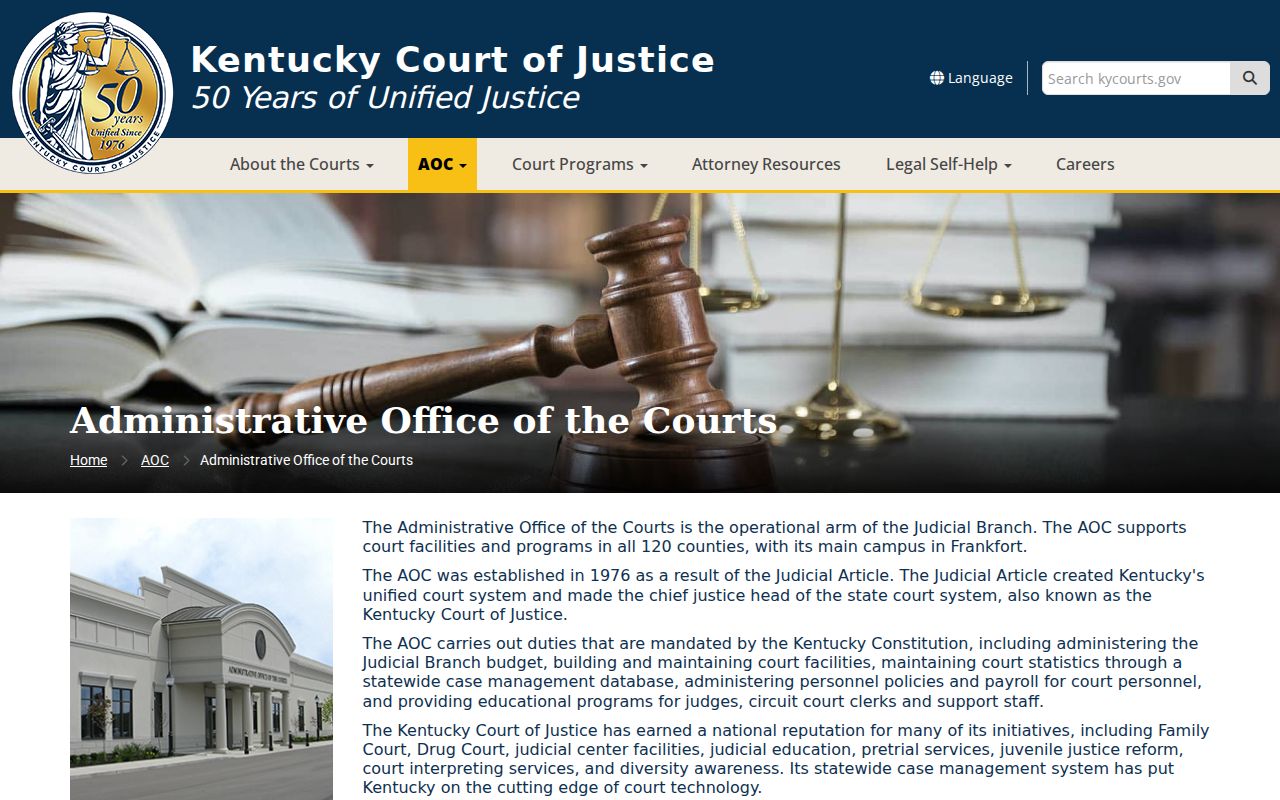
AOC supports facilities, staff, programs, technology, and statistics, but each county Circuit Court Clerk remains custodian of official trial files.
Public Access to Kentucky Court Records
Kentucky case access involves judicial rules and clerk custody as well as the Open Records Act. Agency requests should identify existing records and the proper custodian. Court-case requests use the filing clerk's process because AOC does not become custodian merely by running statewide systems. When only part of a record is exempt, request a reasonably segregable copy and the legal basis for each withholding or redaction.
Key Statutes:
KRS 61.870 defines public agency, public record, and official custodian.
KRS 61.872 establishes inspection and request procedures for agency records.
KRS 61.878 lists privacy, law-enforcement, and legally confidential exclusions.
Administrative Order 2024-17 governs electronic court access, protected images, and sealed cases.
The Kentucky Attorney General's open-records resources provide guidance, forms, and decisions for KRS Chapter 61.
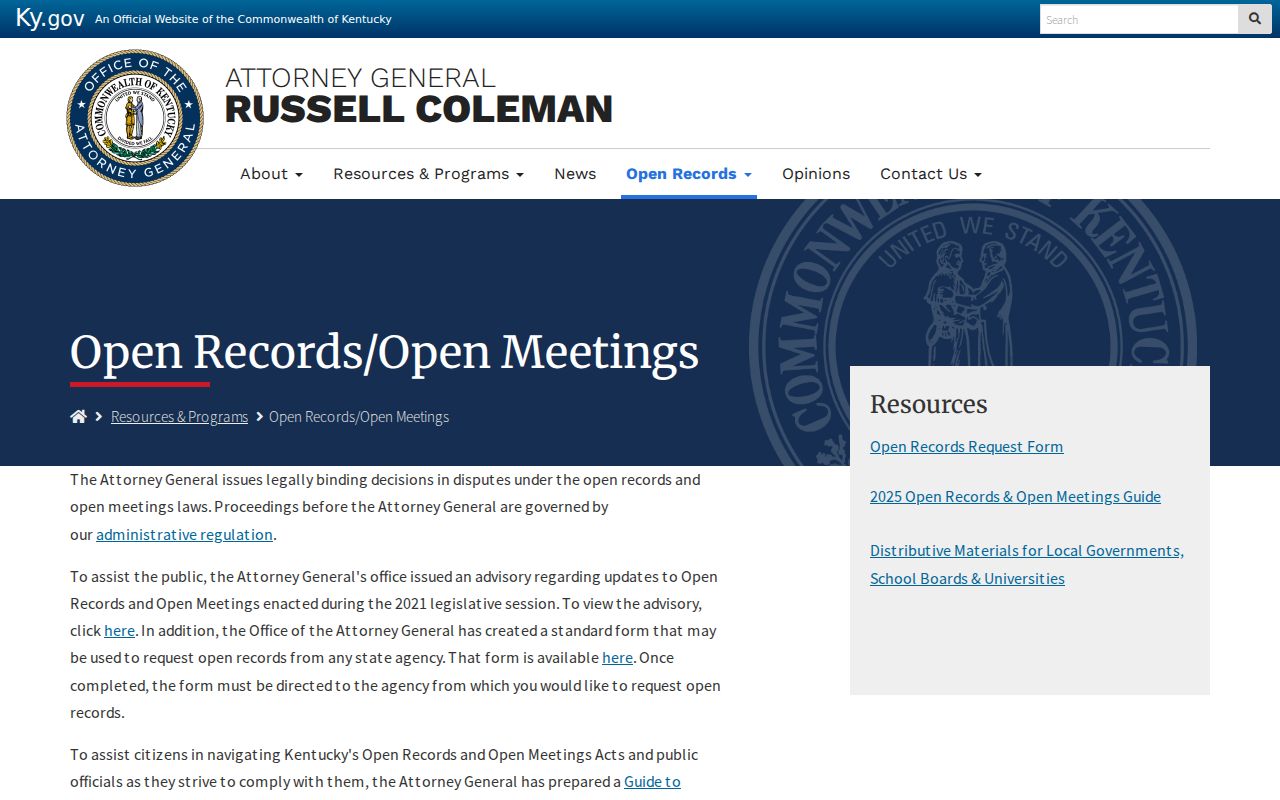
The Attorney General is not a statewide court-record warehouse and cannot supply a county docket.
Restricted Kentucky Court Records
Juvenile files are confidential under KRS 610.340 subject to listed access. Adoption records, mental-health evaluations, disability information, protected addresses, account numbers, Social Security numbers, health data, and minor identifiers can also be restricted or redacted. Sealed matters do not appear in Guest CourtNet. A no-result can therefore reflect lawful protection rather than the absence of a case.
Kentucky expungement begins with an AOC certification, not a generic background check. The person then files the correct petition with the Circuit Court Clerk in the county of the original charge. Eligibility, waiting periods, prosecutor objections, fees, and effect depend on the case and KRS 431.073. A granted order directs the relevant agencies to remove eligible records as the law provides.
Note: Redaction hides protected details while releasing the rest; sealing restricts the case, and expungement follows a separate statutory court process.
Find Kentucky Court Records by County
Official Kentucky trial files are organized by filing county. The six featured counties below represent the state's largest court environments and major metro areas. Each card opens that county's dedicated record site, while the full directory covers every county. Shared judicial districts do not remove the local Office of Circuit Court Clerk.
Jefferson County
Louisville · Kentucky's largest multi-division trial-court environment
Fayette County
Lexington · Major urban Circuit, District, and Family operations
Kenton County
Covington and Independence · Northern Kentucky metro court access
Boone County
Burlington · Fast-growing northern Kentucky county system
Warren County
Bowling Green · South-central Kentucky metro court center
Hardin County
Elizabethtown · Central Kentucky metro-growth court system
The official judiciary also provides a county selector for every Circuit Court Clerk.
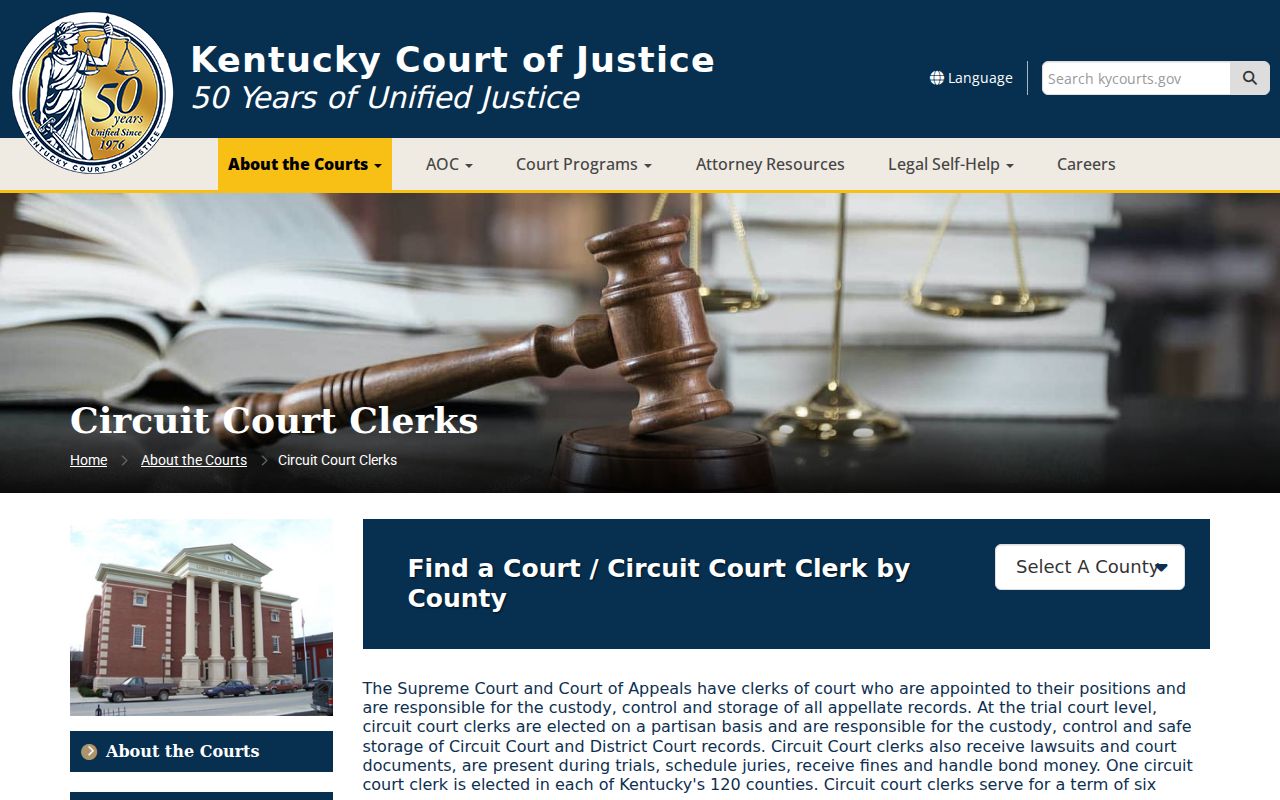
Browse the full directory of all 120 Kentucky counties to open the court records site for any county.
Kentucky Court Records Fees
Kentucky fee schedules supply useful base figures, but they are not universal totals. Facility, service, publication, bond, page, certification, postage, media, and card charges can add. Inspect first when possible and ask whether the receiving organization truly needs certification. Portal convenience fees purchase portal service, not a certified county record.
- Small Claims base filing category
- $40, plus applicable local or service charges.
- Probate estate base filing category
- $40, plus publication, bond, copies, and certification.
- AOC expungement certification
- $40.
- Online three-year driver history
- $6.
- Plain or certified court copies
- Confirm the current county schedule.
A civil fee-waiver motion or criminal indigence form does not waive costs until a judge orders relief. Sheriff, publication, vendor, bond, or transcript charges may fall outside an order.
Interpret Kentucky Court Records
Kentucky case codes commonly include CI for Circuit civil, CR for Circuit criminal, F for District felony or preliminary matters, M for misdemeanor, T for traffic, and P for probate. Read criminal cases count by count: original charge, amendment, plea or verdict, disposition, signed judgment, then later appeal, probation, or expungement events. "Disposed" describes processing and does not mean guilty.
A complaint, petition, indictment, or motion states an allegation or request. It is not a finding. Bond concerns release and appearance, not a fine or sentence. Probation is judicial community supervision; parole follows imprisonment through an executive process. If an abbreviation lacks an official legend, quote it as shown and ask the clerk rather than guessing.
Kentucky Court Records Limitations
Statewide does not mean complete document imaging. Guest access is narrower than party, attorney, agency, or subscriber access. Paper archives, retention rules, delayed entries, transfers, redaction, sealing, and source error can create gaps. Verify identity with several fields and obtain the signed order when the result matters. If the court record itself is wrong, begin with the county clerk; if a separate agency product is wrong, use that agency's correction process with official proof.
The Kentucky Court of Justice homepage is the official entry to courts, forms, payments, county offices, and public services.
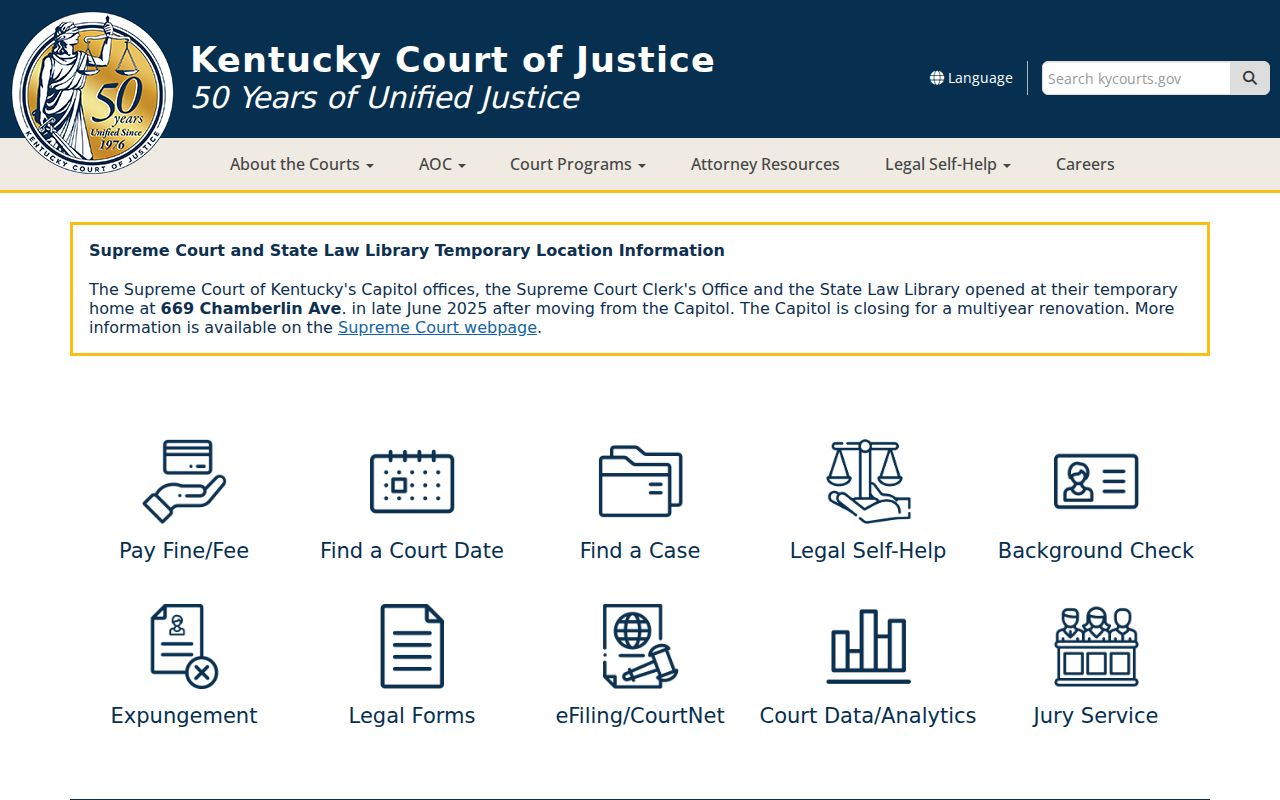
Current portal labels and rollout milestones should be checked there because Kentucky's next-generation eCourts transition is phased.
Note: Confirm material Kentucky court record details with the county clerk before relying on a portal date, status, charge, or balance.
Kentucky Court Records in Transition
Kentucky's current record structure grew from the Judicial Article approved by voters in 1975 and effective at the start of 1976. The reform replaced fragmented lower tribunals with the modern four-tier Court of Justice. The former Court of Appeals became the Supreme Court, a new intermediate Court of Appeals was created, Circuit Court remained the general-jurisdiction trial court, and District Court replaced the older limited courts. The same reform established statewide administration while preserving one local Circuit Court Clerk in each county as the official trial-file custodian.
Central case management later made statewide informational searches and CourtNet-derived statistics possible. AOC's historical caseload categories include complete periods beginning in 1995, but those totals count cases rather than people. The data can show broad trends in probate, eviction, small claims, preliminary felony, misdemeanor, and traffic filings. It cannot establish whether a named person is the same person shown in a docket or supply a certified judgment.
Kentucky is now moving toward a next-generation eCourts and File & Serve environment. The project is intended to replace legacy systems and support a fully electronic official record, but rollout is phased and schedules can change. Protected access, payment, electronic receipts, archives, and official-record rules must move together. Durable instructions remain the same during that transition: use the statewide portal as a lead, identify the county and court, and verify the result with the custodian before relying on it.
Note: Check the live Kentucky judiciary service page before relying on a claimed county rollout date or newly available document feature.
Kentucky Court Records Questions
Is Guest CourtNet the official record?
No. It provides statewide informational case events. The Circuit Court Clerk in the filing county keeps the official trial file and issues certified copies. For appeals, use C-Track and the appellate clerk.
Does one clerk hold every county record?
No. One Circuit Court Clerk per county handles Circuit, Family, and District cases. The separately elected county clerk issues marriage licenses and records land instruments. State agencies also keep custody, driver, criminal-history, and vital-certificate products.
Why is a document missing online?
The docket may show an event without a public image. The document could be protected, sealed, paper-only, archived, outside retention, or available only to a party or authorized user. Ask the filing clerk about the exact item.
Where are federal court records?
Federal dockets use PACER, not Kentucky CourtNet.
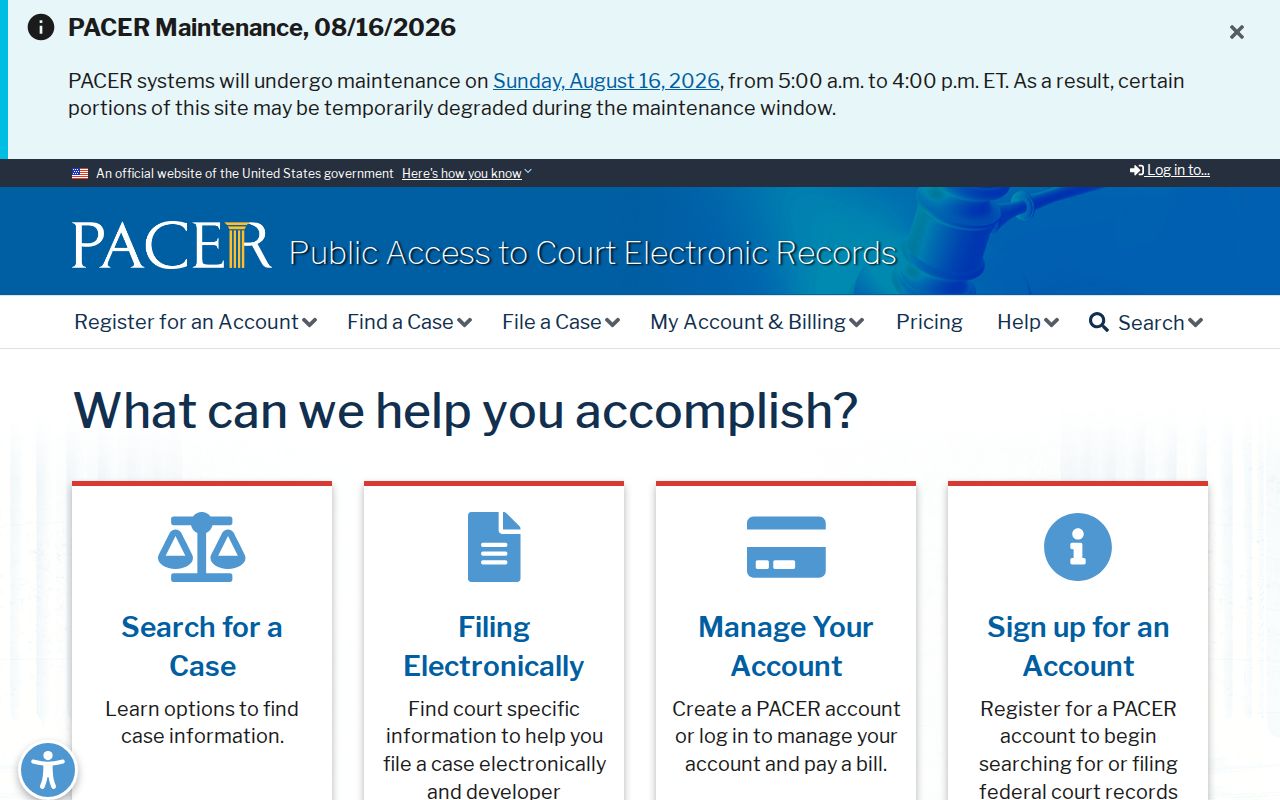
Kentucky is split between Eastern and Western federal districts, with separate bankruptcy courts. PACER fees and sealed-document limits follow federal rules, and certification comes from the federal clerk.